Everything is negative.

REAL LIFE SUPER HERO
"AT YOUR SERVICE"

1970

- The Last Poets release their eponymous debut album. It's combination of spare funk and aggressive, socially-conscious spoken word will be an early brick in the foundation of what would come to be hip-hop.
- James Brown releases 'The Big Payback', an early funk gem that emphasizes the groove rather than melody over his aggressively spoken vocals.
- A young immigrant from Kingston, Jamaica named Clive Campbell begins deejaying at local parties. As DJ Kool Herc, he invents a new technique of deejaying that would cut two of the same records and extend the middle instrumental, or 'break,' of the popular funk and disco songs of the day.

Shanks, Shotguns and Stoves: Ingeniously Crafted Prison Contraband
0 comments Posted by in.SIGHT at 08:41From WonderHowTo.com
With hours on end spent within a cramped cell, there's no limit to what one can conjure up. If they can acquire the right materials, they can build some really cool MacGyver-esque things. Sometimes it's luxurious, like a device for lighting up a cigarette. Sometimes it's essential, like a weapon that protects from the advances of another inmate. And sometimes it's something Michael Scofield would think up in Prison Break—an escape tool to shave some time off their prison sentence.
Below is a compilation of some of these clever convict inventions, from simple handmade contraband to improvised weapons. Some of these items were constructed in the U.S., but the majority of this jailhouse tech was conceived behind bars in other countries, like Germany and Mexico, where life isn't so easy for detainees.


I found this very interesting as I can affiliate with what is said from a personal standpoint (yes I am an introvert) and it also comes from a credible source.
Jerry Brito
Myth #1 – Introverts don’t like to talk.
This is not true. Introverts just don’t talk unless they have something to say. They hate small talk. Get an introvert talking about something they are interested in, and they won’t shut up for days.
Myth #2 – Introverts are shy.
Shyness has nothing to do with being an Introvert. Introverts are not necessarily afraid of people. What they need is a reason to interact. They don’t interact for the sake of interacting. If you want to talk to an Introvert, just start talking. Don’t worry about being polite.
Myth #3 – Introverts are rude.
Introverts often don’t see a reason for beating around the bush with social pleasantries. They want everyone to just be real and honest. Unfortunately, this is not acceptable in most settings, so Introverts can feel a lot of pressure to fit in, which they find exhausting.
Myth #4 – Introverts don’t like people.
On the contrary, Introverts intensely value the few friends they have. They can count their close friends on one hand. If you are lucky enough for an introvert to consider you a friend, you probably have a loyal ally for life. Once you have earned their respect as being a person of substance, you’re in.
Myth #5 – Introverts don’t like to go out in public.
Nonsense. Introverts just don’t like to go out in public FOR AS LONG. They also like to avoid the complications that are involved in public activities. They take in data and experiences very quickly, and as a result, don’t need to be there for long to “get it.” They’re ready to go home, recharge, and process it all. In fact, recharging is absolutely crucial for Introverts.
Myth #6 – Introverts always want to be alone.
Introverts are perfectly comfortable with their own thoughts. They think a lot. They daydream. They like to have problems to work on, puzzles to solve. But they can also get incredibly lonely if they don’t have anyone to share their discoveries with. They crave an authentic and sincere connection with ONE PERSON at a time.
Myth #7 – Introverts are weird.
Introverts are often individualists. They don’t follow the crowd. They’d prefer to be valued for their novel ways of living. They think for themselves and because of that, they often challenge the norm. They don’t make most decisions based on what is popular or trendy.
Myth #8 – Introverts are aloof nerds.
Introverts are people who primarily look inward, paying close attention to their thoughts and emotions. It’s not that they are incapable of paying attention to what is going on around them, it’s just that their inner world is much more stimulating and rewarding to them.
Myth #9 – Introverts don’t know how to relax and have fun.
Introverts typically relax at home or in nature, not in busy public places. Introverts are not thrill seekers and adrenaline junkies. If there is too much talking and noise going on, they shut down. Their brains are too sensitive to the neurotransmitter called Dopamine. Introverts and Extroverts have different dominant neuro-pathways. Just look it up.
Myth #10 – Introverts can fix themselves and become Extroverts.
Introverts cannot “fix themselves” and deserve respect for their natural temperament and contributions to the human race. In fact, one study (Silverman, 1986) showed that the percentage of Introverts increases with IQ.
(Source: carlkingcreative.com)

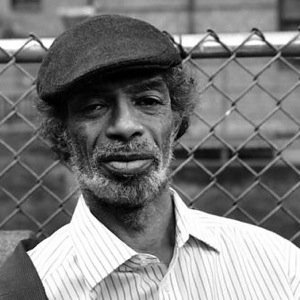
RIP Gil Scott Heron
“The Television Will Not Be Revolutionized”
Idiot boxes of the world unite! To fight off the effects of intelligence, replace smart quotes with fart jokes, substitute sense with scenes from Martin, let the baby’s bathe in that glow and learn all manner of things they don’t really need to know!
The Television Will Not Be Revolutionized!
Channel the content of some rambling nonsense deep into the annals of yo’ subconscious, deprogram and depress chasing some televised success, be them, that, they and those be everything but in control,
The Television Will Not Be Revolutionized!
Small claims Court drama, teenage baby mamas, Osama watching Osama, Celebrity Endorsed indoor saunas, the perfectly cooked piraña and other cannonfodder for you to ponder, all at the speed of imitations of life while the smoke of war gets inhaled thru the peace pipes, be still my beating heart and scare my brain from thinking thoughts as i sit intoxicated by the delights, sarcasm and 3 strikes thrown by my favorite pitcher in a sound surrounded, 3 dimensional, high death, full color mixture, wholly unsocializing and completely uncensored,
The Television Will Not Be Revolutionized!
By this one-eyed monster most of the world was raised, and by this hero most of the world was saved, and to this master most of the world is slaves, it factors your fears with actors and cheers from a live studio audience pushing you to engage in a heroic act of thoughtlessness for the grand prize of a little bread, fleeting fame in the circus and every thought in yo head,
The Television Will Not Be Revolutionized!
“Ain’t no changing me” said my flat screen TV, No More Che’s to the rescue, or Black Panthers to correct you, just coaxial cables and satellite signals to connect you to a world that doesn’t really look like it does on TV, where everything is much shorter, fatter, uglier and in disorder, where u have to do it now because there are no digital recorders where if the present gets boring you can just fast forward,
The Television Will Not Be Revolutionized!
So there will be no revolution, or paradoxically ironic televised public execution of the entire worldwide televising institution, there wont even be a celebritized, televised trial of old baby blue, cuz you see my dear friends the television will not be revolutionized but what about the revolution that should taking place inside………………….of you?
By Wasalu “Lupe Fiasco” Jaco in Dedication to that guiding light of a human being Gil-Scott Heron
"Judas" by Lady Gaga: Biblical talk of Pharoe times. De-holification and the making of cool.
0 comments Posted by in.SIGHT at 16:44
In her recent interviews, Gaga has given several interpretations of the song. In an interview with E! Online she said that it was not meant as an attack of Christianity:
“I don’t view the video as a religious statement, I view it as social statement. I view it as a cultural statement.”On Amp Radio Gaga explained that:
“It’s about falling in love with the wrong man over and over again.”
“The song is about honoring your darkness in order to bring yourself into the light. You have to look into what’s haunting you and need to learn to forgive yourself in order to move on.”

After the announcement of Bin Laden’s death, hundreds of people gathered in front of the White House chanting “USA! USA!”.
Hot Sauce Committee Part 2: a brilliant throwback to the days when the Beastie Boys ruled New York.

Five years and one missing “Hot Sauce Committee” later comes Hot Sauce Committee Part 2. The Beasties have returned with “sharks teeth and tiger claws,” loosening their input jacks and snare lugs and scaling back the electronics from digital busyness to Giorgio Moroder and Roger Troutman inspired analog glory. The Beasties feel permanently young again having crafted an album that is just as consistent, unhinged and enjoyable as Check Your Head. It's almost as if they really went back in time (like in "Fight for your right revisited") and made the old Beasties record another soundstorm.
Check Your Head was a third album debut if one ever existed. It was also a return to the trio’s original punk rock DIY aesthetic; an escape from both the frat boy raps over shiny Rick Rubin production and the crowded Dust Brothers beats that epitomized their West Coast bong blast. Hot Sauce Committee Part Two is the same sort of stripped-down sonic homecoming or in the words of Ad-Rock “bringing it back to 8-7.”
In today’s age of dragging, dropping and Fruitylooping - where the posse cuts require reading the written order of the features to figure out who is rapping - Hot Sauce Committee Part 2 feels more vital than ever.
MCA, Ad-Rock and Mike D each stake out their own rooms in the house party and can use something basic like water and ice or obscure like Grandmaster Caz to outline why they can still rip a mic to shreds. They are as distinguishable from each other as a guitar solo is from a trumpet swell, but still fit just as well together when placed side by side. On Hotsauce their wordplay, metaphors, (tasteful) bathroom humor and playful braggadocio are given the sonic treatment they deserve: warped and flanged on joints like “Nonstop Disco Power Pack” and "Tadlock's Glasses" or padded with the same broken glass distortion as the dank eerie instrumentation of shining (but still hazy) moments like “Long Burn The Fire.”
The Beasties have also never had better diversions and tangents. The hardcore jam “Lee Majors Comes Again” is catchier and more memorable after just one listen than the entire Aglio e Olio EP, and instead of adding multiple tracks of “yes we really play these things” instrumental filler, Hot Sauce’s one moment, “Multilateral Nuclear Disarmament” falls perfectly in the sequence and grooves just right thereby sparing it from The Mix-Up / In Sound From Way Out yawndom.
A very interesting article I wanted to share with you. It is a rather grim reality if you ask me.Written by Thomas Baekdal | Monday, April 27, 2009
These days, everyone is trying to figure out how to connect with other people. It used to be simple, you just placed some ads in whatever newspaper that was most suited to your product, but now that world is becoming ever more irrelevant. So how do you connect with other people today? And more importantly, how do you do it tomorrow?In this article, we are going to take a little tour through the history of information, or more specifically, where to focus your efforts if you want get in touch with other people. It is a really exciting time, because we are currently in the middle of the most drastic change since the invention of the newspaper.
We are seeing an entirely new way for people to interact. One that makes all traditional ways seem silly. It is a fundamental shift, and it will completely change the world as we know it. And the best thing about it is that you get to help make it happen.
So join me on this (unscientific) tour of the last 210 years of information + 10 more years into the future.


“At first, when I thought about birthing a new race and adding the prosthetics, I thought that maybe they should have a certain way they should walk or maybe they move a certain way, but then I realized it is actually a race within our race; it’s a mindset.”
- Source
part of my scratchnotes for a spoken word session
a canvas of my city, where the ugly turns pretty
In my city where there are too many cars,where the stars seem so far,
in my city, of big men and small deeds, classy ladies for cheap thrills,
reasonably absurd in a parody of a faithfull flirth.
My city, where some are more euqal then others,
where children become fathers, and where noone really bothers
they say the blue skies are blue,our blue skies are grey,
and intoxication takes place where saints were once laid.
in my city,there is nothing for sure.
when nothing is sacred,when nothing is pure.
Dear Mr.President I will addres you quite openly
because I see you speak of morality and fiscal clarity
while a bunch of your sons sanity swims down the drain of price calamity
that justifies recesional reality from economic rationality
but didn't Adam Smith state that economic theory lacks applicability
in real situations concerning worldly probabilities
cuz, quite realisticly, every 5th childs' dreams of better life eligibility
evaporate with the epiphany of your next move towards sustainability
big brother is now a real life government experiment on anti-hostility
and our every move and word you record for reasons of security
so how come you can't hear the cries of detrimental social disparity
or is CCTV blind for midnight sexuality and penal forms of insanity
caused by a fusion of pop-culture (i)morality and alcohol afinity!
Im tired of not saying a thing, Im tired of letting this slide
It is not about hip-hop anymore,it just happened to be what opened the door
for my mind and my soul, at which point I chose to take control
look around the world and let go of this race that we hold
this sadness, this madness, this perverted notion of religion and god
global warming won't revert the cold in my soul
nor will all the fannies that shine from the magic box on us all
it will not make me slip from the rhyme I behold
it will not make me forget what goes on in central hall
so this open letter is a dire warning to you all
from another lost child that had enough and won't take anymore!
06.02.2011
This summary is not available. Please click here to view the post.
by Amar Toor on January 29, 2011 at 08:00 AM
 Tunisia's 'Jasmine Revolution' ignited on December 17th, when a street vendor named Mohammed Buazzizi set himself on fire in front of a local police station. The demonstration struck a chord within millions of Tunisians -- many of whom, like Bouazizi, had fallen on hard times, due to the country's stagnant labor market, skyrocketing food prices and high-level political corruption. Within days, protesters had flooded the streets of Sidi Bouzid, an economically downtrodden region of the country. Within weeks, they had forced President Zine Al Abidine Ben Ali to flee the country, after 23 years of autocratic rule.
As the upheaval unfolded, it soon became clear that the Jasmine Revolution was not a typical uprising. Tunisians spread their revolutionary fervor to the digital sphere, where Ben Ali's regime had previously enjoyed unchallenged sovereignty. As scores of protesters clashed with police and demanded economic and social reform, an equally impassioned, if comparatively less tangible war was being waged online -- one involving not tear gas and demonstrators, but malware and rogue hackers.
Ben Ali's regime decided to reassert its control over the media during the upheaval by launching a cyber attack against some of Tunisia's most outspoken critics. Within a few hours of the large-scale crackdown, the government's targeted phishing campaign effectively muzzled a select group of online activists, leading to the arrests of influential bloggers and activists.
This time, however, the government's online gag order met new resistance from an unexpected source: Anonymous.
Anonymous Launches 'Operation Tunisia'
 The notorious 'hacktivist' collective launched its 'Operation Tunisia' retaliatory strike in early January, after the Tunisian government blocked access to Wikileaks and WikiLeaks-related news. Anonymous had already garnered international attention for its distributed denial of service (DDoS) attacks on companies that had severed ties with WikiLeaks, including MasterCard, Visa and Paypal . With OpTunisia, however, Anonymous took aim not at a corporation or individual, but at an entire state -- and one that was on the brink of collapse.
As the operation unfolded, the scope of Anonymous's agenda gradually extended beyond a mere defense of Julian Assange's whistleblowing organization. After hacktivists began collaborating with Tunisian free-speech activists, the organization decided to orchestrate a bona fide crusade, not in the name of Assange, but in the name of the Tunisian people. "We did initially take an interest in Tunisia because of WikiLeaks," an 'Anon' told Al-Jazeera. "But as more Tunisians have joined they care more about internet censorship, so that's what it has become."
The group's swift DDoS attack successfully brought down a collection of government websites, including those of the president, prime minister, ministry of foreign affairs and stock exchange. Anonymous even managed to plaster an open letter across the homepage of the prime minister's site. The hacktivists later posted a series of graphic videos to YouTube, in the hopes of exposing the horrors of the Tunisian struggle.
It didn't take long for the Tunisian regime to retaliate by arresting a group of highly visible activists, including a Tunisian rapper who wrote a searingly critical song called "President, your people are dead." According to Reporters Without Borders, the disidents were detained a few days after Anonymous's strike, and were interrogated about any involvement with the attack.
The regime eventually regained control over its various Web platforms, but its online dominion was short-lived. On January 14th, Ben Ali dissolved his government and fled the country -- not, of course, because of anything Anonymous did, but because of what the Tunisian people did. Nevertheless, the group's digital involvement in a very real national crisis may mark a turning point in both cyber-warfare and online mobilization.
"Cyber guerilla warfare" is the term that cyber-security expert Charles Dodd used to describe Anonymous's pro-WikiLeaks attacks, when speaking to Reuters in December. "They attack from the shadows and they have no fear of retaliation. There are no rules of engagement in this kind of emerging warfare." Anonymous proved with its initial DDoS attack that it can be effective in retaliating against tyrannical cyber law. Whether it can effect real change, however, remains to be seen.
The Aftermath

"I, like many other Tunisians, got all of my information from Facebook and Twiiter," Mejia wrote in an e-mail to Switched, adding that most news outlets were a good "two days behind" the updates she received on her Twitter feed. Facebook, meanwhile, played a particularly crucial role in helping local militias identify members of pro-Ben Ali police, who often traveled in unmarked SUVs. "I would say most elements of the rebel police were identified via Facebook." By comparison, she argues, Anonymous's role on the physical front lines of the Jasmine Revolution was minimal.
Mejia, who specializes in Middle Eastern and North African politics, acknowledges that the threat of Anonymous-esque attacks could theoretically force oppressive regimes to think twice about cracking down on the Web. But she doesn't think the tactic alone will be as successful in other Middle Eastern countries, where free speech hacktivists would have to overcome a deeply ingrained political and cultural mentality on media censorship -- a mentality that seems to persist even in a post-Ben Ali Tunisia.
Anonymous certainly didn't bring down the Tunisian government, and it may not have even altered the landscape of the Tunisian media. But its digital-collective involvement in an intrinsically domestic conflict was undeniably a first. Inspired by the struggles of a repressed Tunisian citizenry, a stateless, international group of free-speech advocates took it upon themselves to engage in a still-undefined form of guerilla warfare. Their tactics are unproven, and their success is undetermined.


