
John Legend ft. The Roots - Wake Up Everybody

By Outspoken Poet

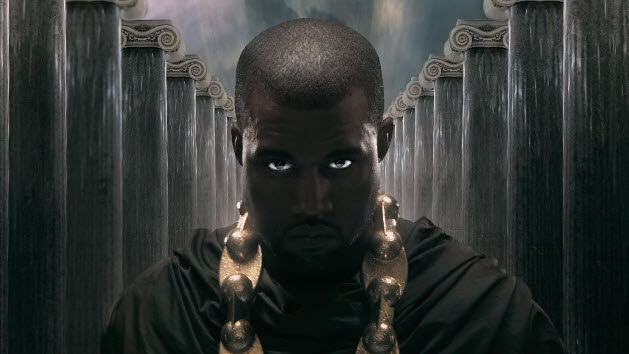

- The two columns called the “Pillars of Hercules” in Ancient Greece stood at the gateway to the sphere of the enlightened
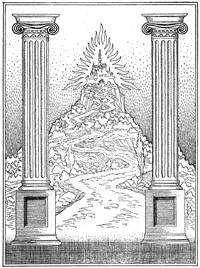
“The city of the philosophic elect rises from the highest mountain peak of the earth, and here the gods of the wise dwell together in everlasting felicity. In the foreground are the symbolic pillars of Hercules which appear on the title page of Bacon’s Novum Organum, and between them runs the path which leads upward from the uncertainties of earth to that perfect order which is established in the sphere of the enlightened. “
- Manly P. Hall

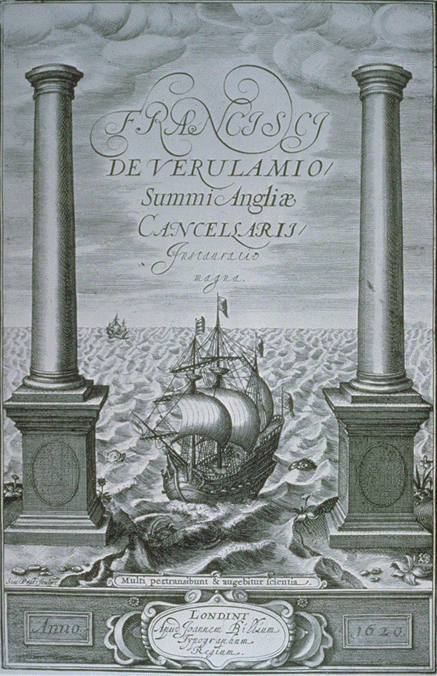
- Pillars of Hercules in Francis Bacon’s “New Atlantis” as a gateway to the New World

- Two pillars leading to Jacob’s Ladder in this Masonic tracing board
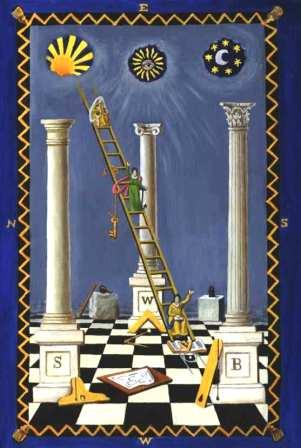

- Masonic initiate standing between the twin pillars as the third pillar, in the same fashion as Kanye West in the video.


- Horus pendant on Kanye’s chain

“Horus, the son of Osiris and Isis, was called “Horus who rules with two eyes.” His right eye was white representing the sun while his left eye was black representing the moon. According to Egyptian legend Horus lost his left eye during a fight with his murderous uncle, Seth, to revenged his father’s death. Seth tore out his nephew’s eye but lost the fight because the assembly of the gods declared Horus the victor. The eye was reassembled by the magic of Thoth. Then Horus gave the eye to Osiris who experienced rebirth in the underworld.”
- Jordan Michael, Encyclopedia of Gods

- Horus, god of the sky


- The Eye of Horus as depicted by the Golden Dawn Mystery School


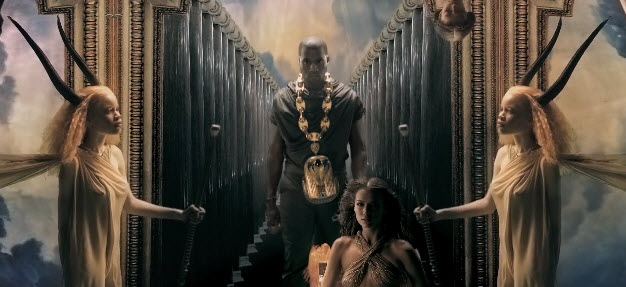
- Kanye standing between two horned female figures

- Isis and Hathor crowning Queen Nefertari. Both goddesses were depicted with bovine horns on their heads.


- Hathor holding a sceptre with Pharaoh Ramses II
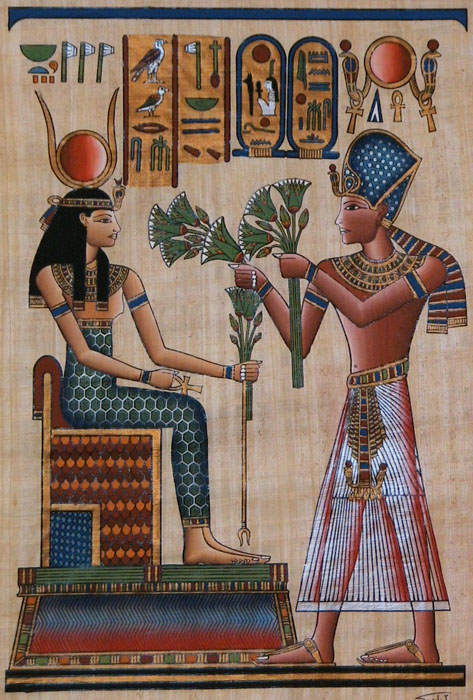
“The goddess (Hathor) [...] manifests two aspects of her divine power: first of all, she participates in the afterlife rite of passage, by means of which the deceased attains eternal life, and, second, she demonstrates her special connection to the Egyptian king. Hathor is rightly called a royal goddess, and in this role she is linked in various ways to the life of the pharaoh. Often the pharaoh would call himself the oldest son of Hathor.”
- Archive for Research in Archetypal Symbolism

- Sword hanging above Kanye West’s head
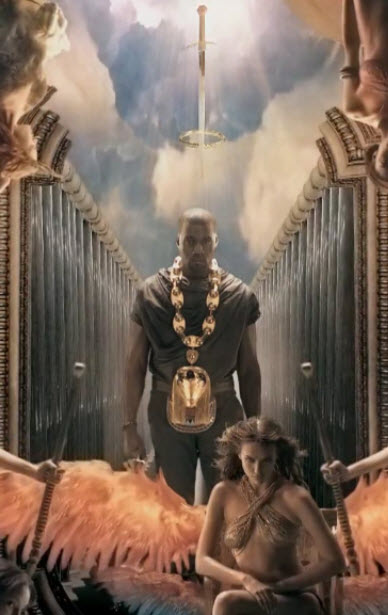
“Dragonlance: An image of a sword descending into a crown hovers over Kanye’s head, bringing to mind Volume Two of Douglas Niles’ series “The Crown and the Sword: The Rise of Solamnia,” in which Sir Jaymes Markham commands the orders of the Rose, Sword and Crown.”
- Kanye West’s ‘Power’ Video: A Cultural Cheat Sheet, MTV.com

- Wenceslas Hollar’s depiction of the Sword of Damocles

“The Damocles of the anecdote was an obsequious courtier in the court of Dionysius II of Syracuse, a fourth century BC tyrant of Syracuse. Damocles exclaimed that, as a great man of power and authority, Dionysius was truly fortunate. Dionysius offered to switch places with him for a day, so he could taste first hand that fortune. In the evening a banquet was held where Damocles very much enjoyed being waited upon like a king. Only at the end of the meal did he look up and notice a sharpened sword hanging directly above his head by a single horse-hair. Immediately, he lost all taste for the fine foods and beautiful girls and asked leave of the tyrant, saying he no longer wanted to be so fortunate.
Dionysius had successfully conveyed a sense of the constant fear in which the great man lives. Cicero uses this story as the last in a series of contrasting examples for reaching the conclusion he had been moving towards in this fifth Disputation, in which the theme is that virtue is sufficient for living a happy life. Cicero asks “Does not Dionysius seem to have made it sufficiently clear that there can be nothing happy for the person over whom some fear always looms?”
- Source
 Ritual initiation represented in a display of geometry and symmetry
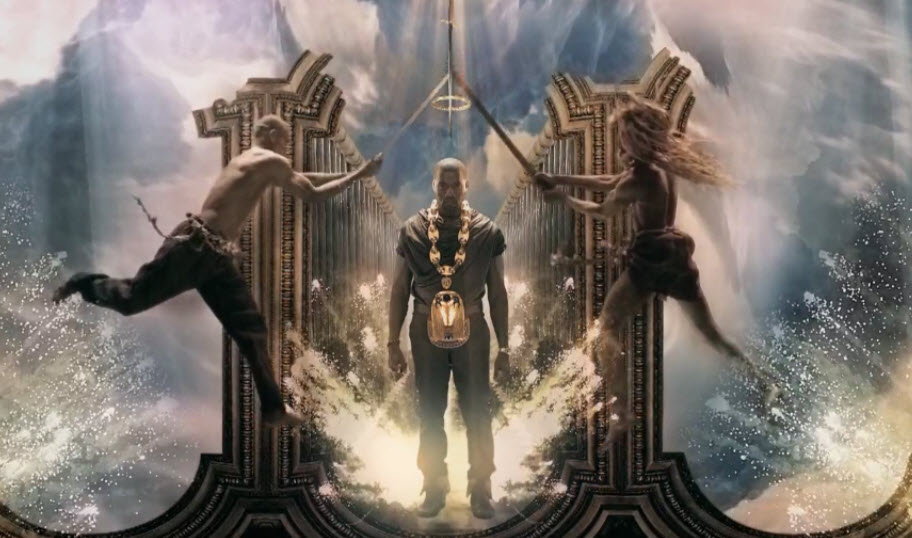 Ritual initiation represented in a display of geometry and symmetry

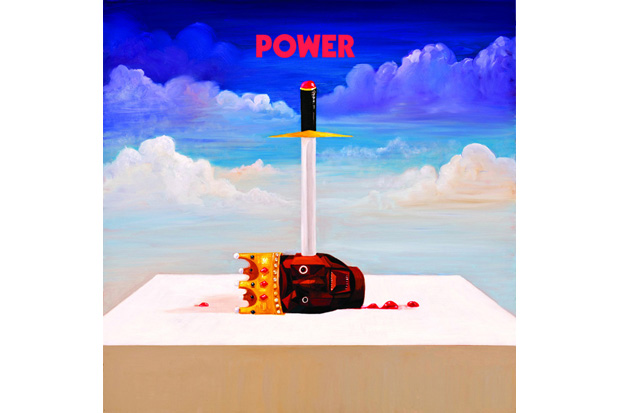
- Covert art of Power portraying the killing of Kanye West as a king.

- A perfect ashlar in a Masonic lodge. In Masonic symbolism, the candidates start their journeys as allegorical “rough ashlars” and, through knowledge and wisdom, smooth out their edges in order to become a perfect ashlar.

 Masonic Square and Compass
-
- In Conclusion
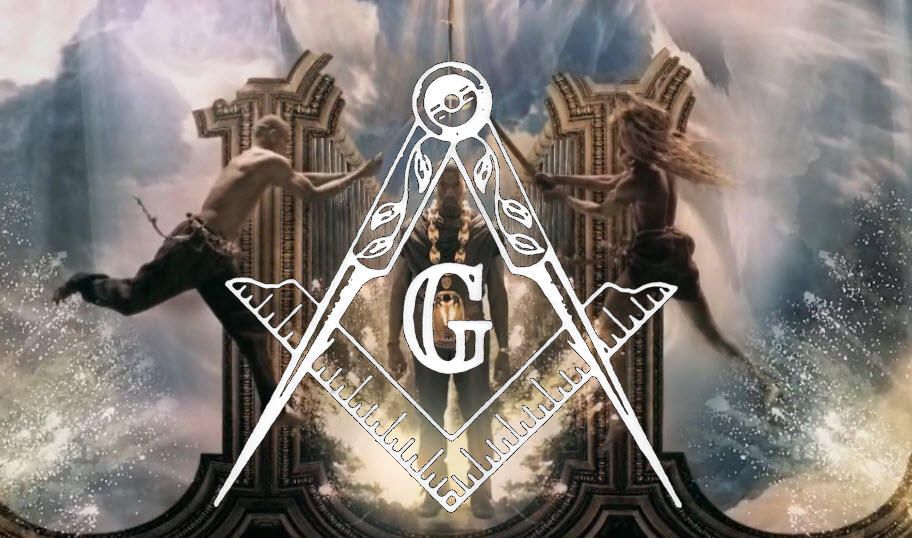 Masonic Square and Compass
Washington Post Foreign Service
Tuesday, August 10, 2010


I've never been a big fan of diet drinks (I prefer good old water), and now I'm glad. A study conducted by the University of Texas Health Science Center at San Antonio followed over six hundred people ranging from twenty-five to sixty-four years old for up to eight years and found that those drinking diet soda — even as little as one can or bottle a day — did not lose weight and were significantly more likely to become overweight than those who drank regular soft drinks or none at all. How can this be? No one knows for sure, but scientists think that artificial sweeteners, perhaps even the caramel coloring, may muddle brain chemistry. The brain in a sense gets a reward, and the desire for more sweets is intensified. The more of these fake sweet products you eat or drink, the more sweets you want.

Album Review: Loki & Scatabrainz – “Summer Knows... A Darker Shade of Grey"
0 comments Posted by in.SIGHT at 11:01

Published in The Times Magazine.

A Picture That Changed the Face of AIDS
In November, 1990, LIFE magazine published a photograph of a young man, David Kirby -- his body wasted by AIDS, his gaze locked on something beyond this world -- surrounded by anguished family members as he took his last breaths. The haunting image of Kirby's passing (above), taken by a journalism grad student named Therese Frare, became the one photograph most identified with the HIV/AIDS epidemic that, by then, had seen as many as 12 million people infected. Now, 20 years after her photograph helped transform public perception of the disease, LIFE spoke with Frare about that picture; the international controversy it sparked when United Colors of Benetton used it in a 1992 ad; and the never-before-published photographs she took before and after David Kirby's death -- photos that reveal the untold story behind one of the 20th century's most heart-breaking, indelible images.


By the end of the Reagan/Bush era, Shakur's auspicious musical debut, including lyrics discussing his Black Panther family, coupled with leading movie roles, threatened to bring the Panthers back into vogue.
Thus it is no coincidence that Shakur attracted police attention in direct proportion to his fame and success. In line with Shakur's quote, "I never had a record until I made a record," shortly after his successful solo debut, Oakland police ticketed him for jaywalking, then arrested and beat him in custody.Shakur's first record, 2Pacalypse Now, railed against the FBI, the CIA, and President Bush. In 1992, a year after that album's release, Vice President Dan Quayle, and later Senator Bob Dole, singled him out as responsible for police deaths.
With the FBI watching Shakur since he was a teen, and his leadership in the New Afrikan Panthers, a group dedicated to replicating the Black Panthers,police involvement in his life deserves more scrutiny.
While Shakur's lyrics often dramatized inner-city life, including what some might view as negative images, glorifying gang life and denigrating women, they also included many positive political messages: ideas about Malcolm X and various Black Panthers.As a youth, Shakur performed benefits for Black Panther prisoners. By nineteen, he sang with the Grammy-nominated band Digital Underground. Besides his stint as a Panther Chairman and his Underground Railroad/Thug Life Movement, Shakur participated in a Stop the Violence program, helped with a home for at-risk youth, sponsored a "Celebrity Youth League," joined Central American solidarity benefits, and regularly spoke at rallies for voter registration and progressive activist groups.
The nature of the beneficiaries of Shakur's ever-increasing success must have set off alarms in the intelligence world. Some of Shakur's enormous wealth (the estimated worth of his 200 unreleased recordings alone was over $100 million) was donated to programs and causes his Panther family supported, including Afeni Shakur's research efforts, with her imprisoned partner Mutulu, which eventually contributed to the release of Pratt in 1997.
Shakur was also achieving a new-found maturity in his mid-twenties. His engagement to Kidada Jones, daughter of music mogul and Vibe magazine owner, jazz composer Quincy Jones must have worried police and intelligence officials, because of the vast wealth and influence of the elder Jones, and concern that Shakur's activist projects, such as his "Thug Life Movement" to turn drug dealers into lawful singers,and his last interview statements of going back to his family's ways, would mark a return to his earlier radical activism.
The Setup
The finding of continued COINTELPRO-type activities adds weight to evidence that Shakur's associate Jacques Agnant (a/k/a Ricardo Brown, a/k/a Nigel) was an undercover agent who infiltrated his life and contributed to his legal problems. In 1993, after befriending Shakur, Agnant introduced Shakur to Ayanna Jackson the night she had consensual sex with the singer, first on a dance floor and then in his hotel room.In a second visit to Shakur's hotel room several days later, set up again by Agnant, Jackson charged Shakur, Agnant, and two others with sexual assault.
Events around the trial point to Agnant's government connections. Agnant's trial lawyer, Paul Brenner, had represented the Policemen's Benevolent Association for many years.In addition, Agnant's case was severed from that of the other defendants without protest from the prosecutors. And, after Shakur's trial, Agnant's felony indictment was dismissed, and he simply pleaded guilty to two misdemeanors.
Shakur was convicted of three of the nine charges, relating only to non-consensual touching of Jackson's buttocks (typically reported only as "sexual abuse"), and sentenced to one-and-a-half to four-and-a-half years, an extremely harsh sentence.(In 1994, New York City police admitted "accidentally erasing" a tape Shakur and companions had of Jackson that supported Shakur's defense. His lawyer, Michael Warren, successfully argued that the police also planted guns in the hotel suite where the supposed assault occurred.
Jacques Agnant was also connected to Shakur's near-fatal mugging in late November 1994. Toward the end of Shakur's sexual assault trial, Agnant was seen several times secretly following Shakur. Several days later, "Booker," a man Agnant had introduced to Shakur, paged the singer and asked him come to a studio in Times Square to record with a new rapper. Booker called Shakur insistently that night, lied to him about who would be there, and offered $7,000 cash from his pocket to get Shakur to the building. When Shakur arrived with three companions, two men held him at gunpoint in the lobby and stripped him of his gold jewelry, although they left his diamond-encrusted Rolex, which Agnant had bought for him. Then they shot him in the groin and twice in the head, while he was face-down on the floor.
Los Angeles
Some suspicious aspects of the event were noted by editors of the Amsterdam News.Shakur and a companion both said they saw a police car outside the lobby doors on Broadway, immediately after the assailants fled, guns in hand. The New York Police reported this as a random mugging, yet the assailants picked an extremely well-lit Times Square area for a robbery.
In what the Washington Post described as "one of the many strange twists in the case,"three of the same cops who first appeared a year earlier at Tupac's hotel in the sexual assault arrest were the first to arrive at this near-fatal "mugging."And at least one has been identified as a member of New York's now infamous Street Crime Unit.
A History of Provocations
There are many examples of police and intelligence provocations against Panthers, including infiltrators, fake letters, fabricated rivalries, etc.
After Shakur's imprisonment for the sexual abuse conviction, jailmate "informants" and anonymous letters he received led the singer to believe that his fellow rapper friend Biggie Smalls (a/k/a Christopher Wallace) had set up the shooting, even though Smalls lacked a motive for doing so.
Biggie Smalls was killed in Los Angeles in 1997, seven months after Shakur's murder. The L.A. Times reported that New York police officers were near the murder scene when it occurred, supposedly taking part in a federal investigation into Smalls's record label.His death helped "substantiate" the East/West rap war that the authorities were trying to foster, and directed suspicions toward Brooklyn-based Smalls for California-based Shakur's death.
Political writer Christian Parenti suggests that the East/West rap music feud, as well as Shakur's sexual assault charge, may have been a latter-day COINTELPRO against rap artists.
A Desperate Agreement
After rejecting two previous offers from Death Row Records owner/producer Marion "Suge" Knight, an imprisoned Tupac Shakur was finally forced to sign a contract that included his bail money. But people close to Shakur knew he wanted to leave Death Row and start his own label. Ten days before his murder, Shakur fired Death Row lawyer Dave Kenner, who had been assigned to him by Knight. Friends of Shakur reported that this move was very dangerous because of Kenner's power in Death Row Records and Knight's violent business practices.
LAPD intelligence operations suggest Knight's connection to a government program.Los Angeles was the site of the largest western FBI/police intelligence collaboration against Black activists in the 1960s and 1970s, as described above in the targeting of Geronimo Pratt. L.A. was also the site of the CIA-Contra connection to crack cocaine in the 1980s, and there is evidence that Knight was involved in drug dealing at that time.Crack cocaine infiltrated into South Central L.A., created millionaires, some of whom worked with the authorities, particularly the notorious government collaborator "Freeway" Ricky Ross.
One of L.A.'s two top cocaine dealers who came on the scene at the same time as Ross and reportedly "ended up buying from him... and... learning from him," was Michael Harris.Harris, who ended up in jail, was represented by David Kenner, who convinced him to put up the first million dollars to start Death Row Records. Kenner made himself president of Death Row Records and later completely cut Harris out of the company. Harris is currently suing Kenner.
Suge's Role
It was Suge Knight who was driving the car in Las Vegas the night of Tupac's murder. Kidada Jones, Tupac's fiancée, reported that Tupac wanted to drive his own car that night, but Knight convinced the rapper to ride with him in an open-windowed BMW. According to an ex-bodyguard of Knight's, the murder scene was "aberrant" because there were no armed bodyguards in Knight's car nor in the accompanying car behind them. Although Knight had lived in Las Vegas for several years, and knew the area well, he made a curious U-turn away from a nearby hospital as Shakur lay dying next to him. Weeks later, Knight stated that he wouldn't give anyone information about the killers because "it's not my job." Knight was arrested and jailed for violating his probation a few days after Shakur's death. He has continued to run Death Row Records from his jail cell. (In early April, Knight was named as a suspect in Biggie Smalls's murder, which the authorities claim he masterminded from jail.)
After Tupac's death, Afeni Shakur was told that her son owed Death Row money, even though his albums for the company had grossed over $150 million in sales (70 percent of rap albums are bought by white youth) . While Afeni won the legal right to obtain all of her son's unreleased recordings, she only received a portion of them from Death Row. And their more than $100 million estimated dollar value would soon decrease. With very little financial motive for the only suspect, Death Row, government pressure probably led Knight to let 13 illegal bootleg discs hit the streets and massively devalue Afeni Shakur's inherited estate.
Tupac's Legacy
In his last interviews, Shakur espoused radical political ideas and plans. He spoke of religion as social control, of returning to his family's ways but "with a more militant philosophy," of plans to start an interracial "lost-tribe" political party, and to devote future album proceeds to start community centers. He also explained that his trademark "W" hand sign, which had indicated the West Coast, would now mean "War." He said, "West Coast and East Coast together [to gain] power" for "Black America."
Shakur's incredible fan devotion and societal influence were likely thorns in the side of the intelligence community. After his death, Shakur received tributes by leading intellectuals and was memorialized in mass assemblies at Black colleges. His legacy sparked courses devoted to his work at prestigious universities, including the University of California at Berkeley.
While unsubstantiated versions of the story behind Tupac Shakur's death are frequently asserted, there has been no real independent investigation of government involvement. Shakur's political-activist life and radical heritage call for such an inquiry.

